
After requesting a meeting with the French Minister of Culture, the European Organisation for Responsible Prospecting was invited to the Ministry of Culture to meet the officials in charge of heritage. The meeting was an opportunity to present the organisation's work on supervising metal detecting, as well as its plans for the coming years.
It was also a chance to explain why supervising metal detecting is essential, not only to protect heritage, but also so that this activity can take place within a legal, recognised and valued framework.

Thank-you card sent to the Ministry of Culture by Sandra Chiha, President of OEPR, and her team, following this invitation.
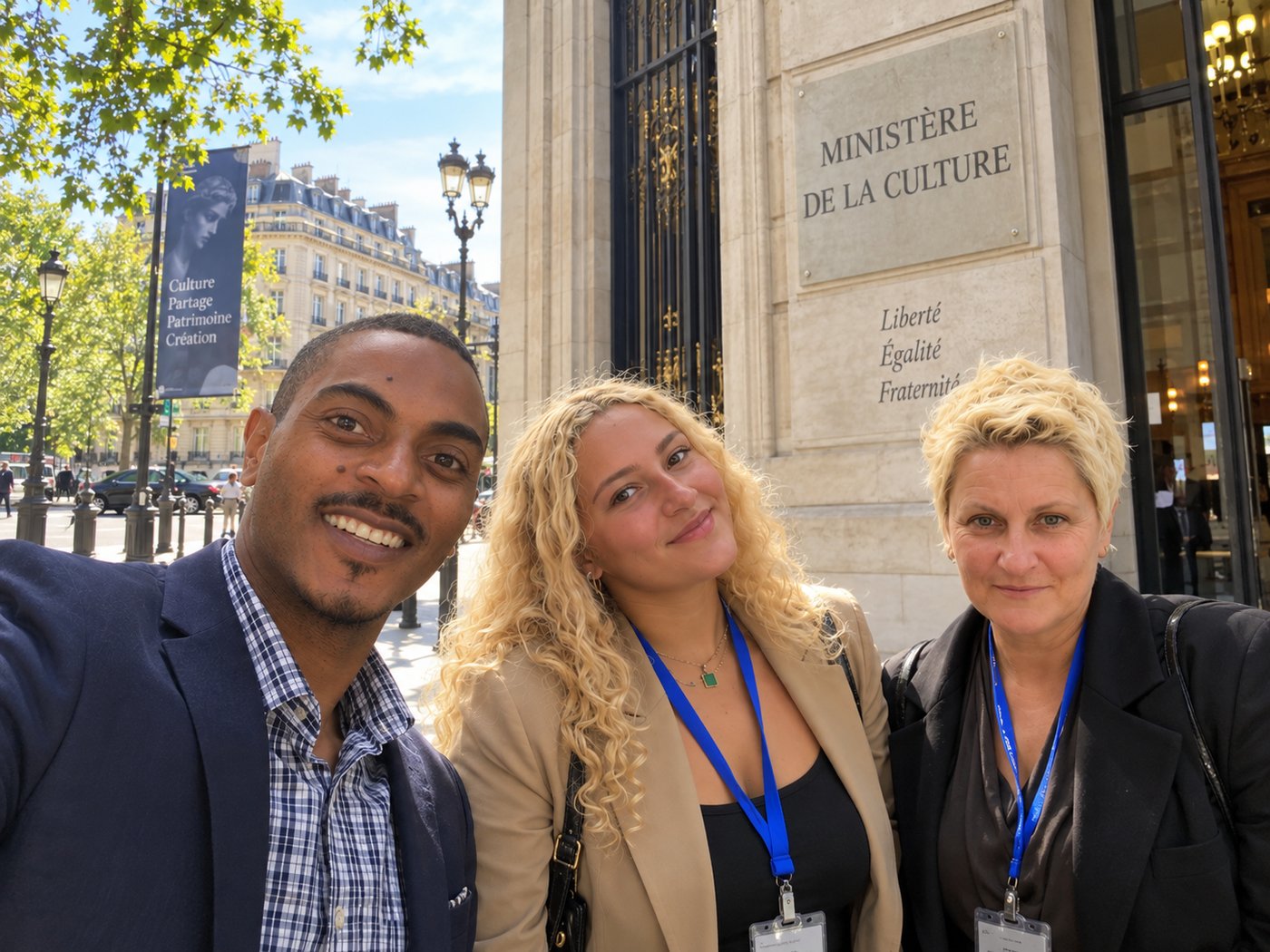
The OEPR team in front of the Ministry of Culture on the day of the invitation.
It was with pride that the European Organisation for Responsible Prospecting went to the Ministry of Culture in Paris, following its request to the Minister of Culture. Although the organisation was not received by the Minister in person, it was invited to meet the officials responsible for heritage matters — an important institutional recognition for a young association committed to these issues.
The visit was an opportunity to present OEPR's work in concrete terms: supervising metal detecting through training, encouraging prospectors to systematically report their finds, and the aim of making this practice a recognised partner in heritage protection rather than an activity on the margins of the institutions. Discussions also covered how the regulations might change and the role that trained, supervised detectorists could play alongside archaeological services in the future.
A highlight in the organisation's journey, which the OEPR team wanted to share with all its members and supporters.
While preserving historical and archaeological heritage remains OEPR's top priority, clear supervision of metal detecting also brings other benefits to society.
A clear framework ensures that every find of historical or archaeological interest is reported, studied and preserved, for everyone's benefit.
By leaving the grey zone, metal detecting gains legitimacy and a better image, to the benefit of prospectors who respect the rules.
Trained and supervised detectorists can, in some contexts, assist with investigations carried out by the authorities.
A supervised practice can help locate and clear land containing buried metal waste or debris.